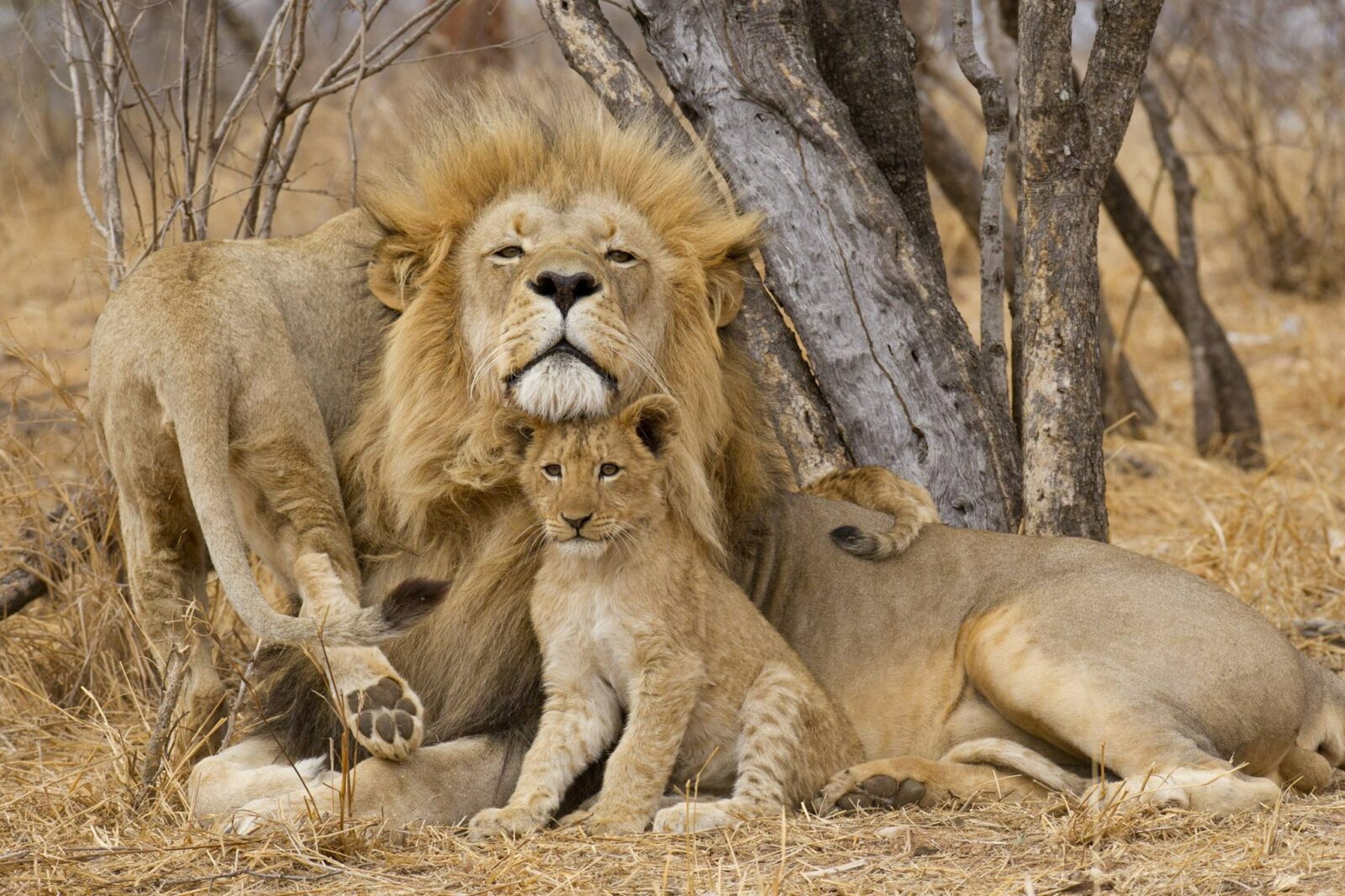
Physical Appearance: Can vary by geographic region. Fur is typically tawny colored, but can also be buff yellow, orange-brown, white-gray and dark brown. Tails have a tuft of black fur on the end. Males have manes that can vary in fur length, coverage of body, and color.
Length/Weight: Males average 8-10 feet and females average 6-8 feet, from nose to tail. Males range between 330-550 lbs.; females 260-395 lbs.
Lifespan: Wild male lions live on average 8-10 years, females up to 16 years. In human care, both male and female lions can live up to 20 years.
Environment
Range: African lions can be found throughout most of sub-Saharan Africa. Primarily found in eastern and southern Africa in elevations up to 13,000 ft.
Habitat: Savannas, plains, grasslands, dense bush and open woodlands. Smaller numbers can be found in semidesert and mountain habitats.
Diet
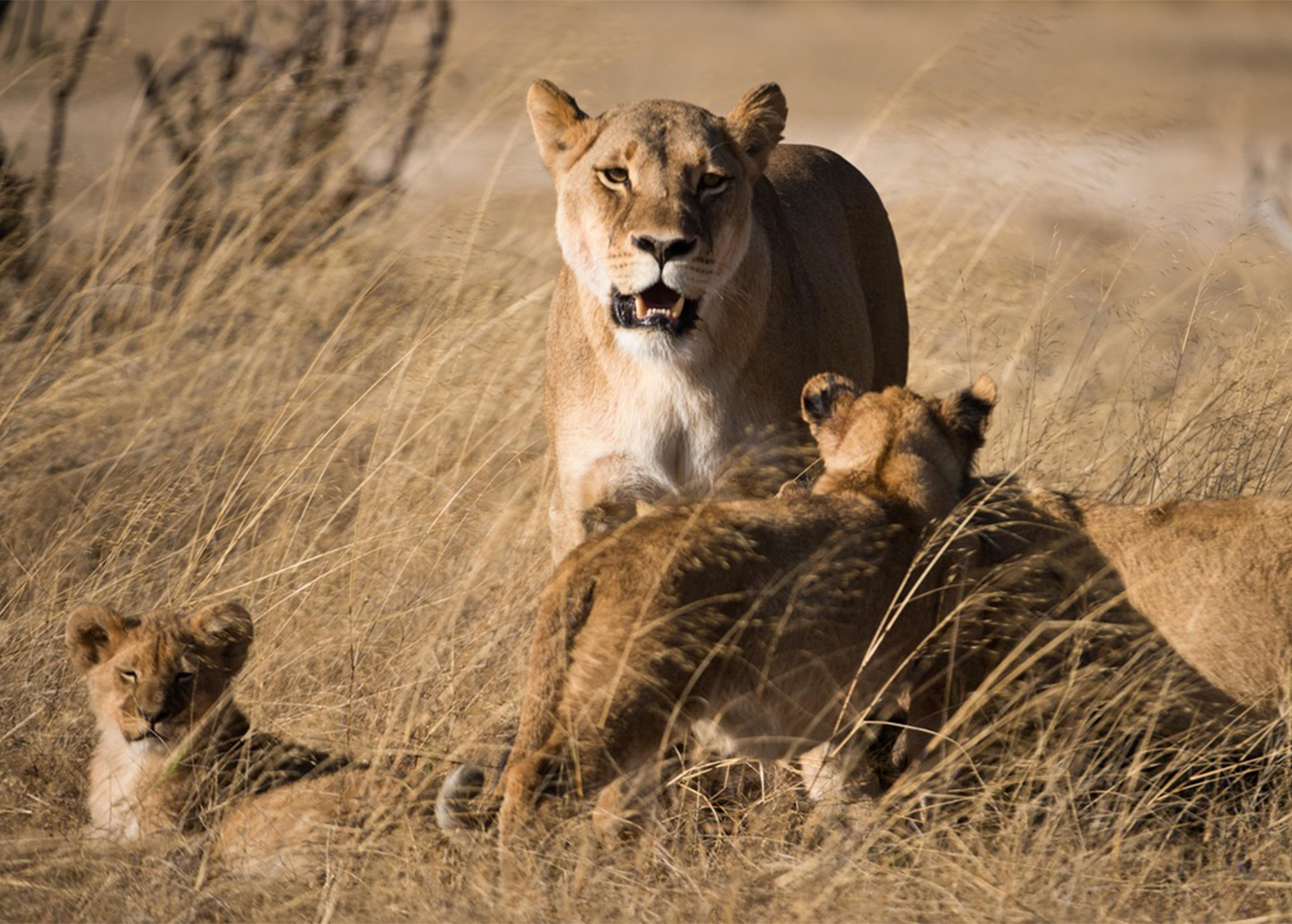
Lions are obligate carnivores, preferring ungulates but will hunt smaller animals. Females are the primary hunters and work together. Many of the animals they prey upon are faster, so teamwork is essential. Lions will hunt alone if presented with a good opportunity, and they are also known to steal kills from other predators. Young lions will begin to assist with hunting at about a year old.
Apex predator and keystone species – lions are the top of their food chain and their survival is critical to the health of their ecosystem.
Reproduction
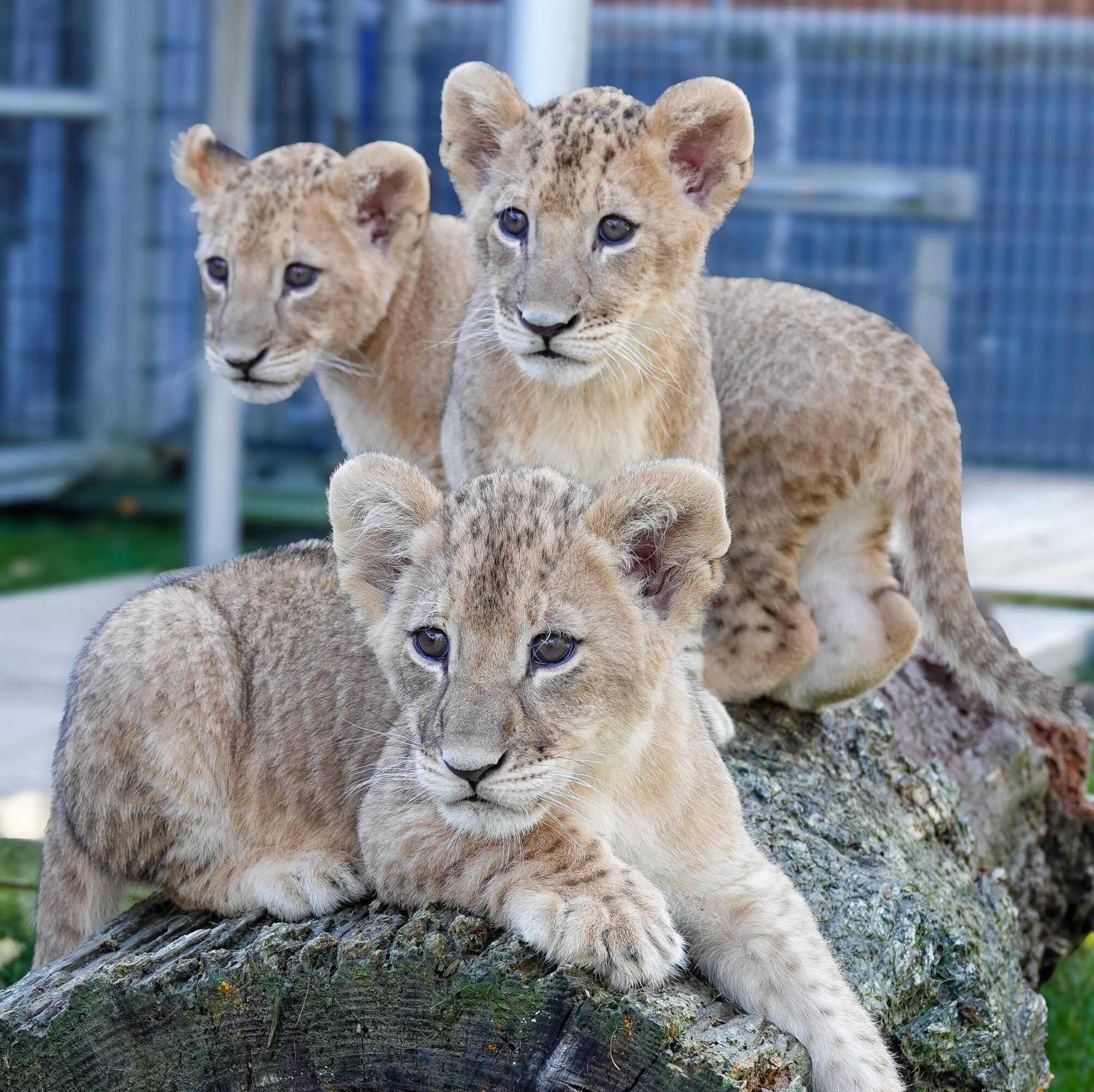
Males and females reach sexual maturity at 2-3 years of age. Lions breed year round. One to four cubs are born after a gestation period of about 110 days. They are 2-4 pounds at birth and are blind with spots on their coat. Cubs are weaned around 6 months, but start eating meat around 3 months. Males leave their birth group at around 2 years old and typically form coalitions with siblings or other bachelor males. Females stay with their birth group.
The reproductive cycles of pride females will often synchronize. This allows for communal raising of the young and reduces nursing competition from older cubs.
When one or a group of new males take over a pride, they will often kill any existing young cubs. This is believed to happen because females will not go into another reproductive cycle until her cubs mature or die.
Conservation
Status: Listed on IUCN: VULNERABLE
Population Trend: DECREASING
Lion populations in Africa have declined sharply due to habitat loss, disease, and human conflict, with some regions—such as West and Central Africa—now hosting only small, isolated, and critically endangered groups.
Efforts: Conservation strategies focus on protecting habitat, ensuring prey availability, improving coexistence with people, and strengthening management in protected areas where lions persist.
Important Facts
Lions are the only cat that are sexually dimorphic, meaning there is a visible distinction between males and females.
The only cat that lives in social groups.
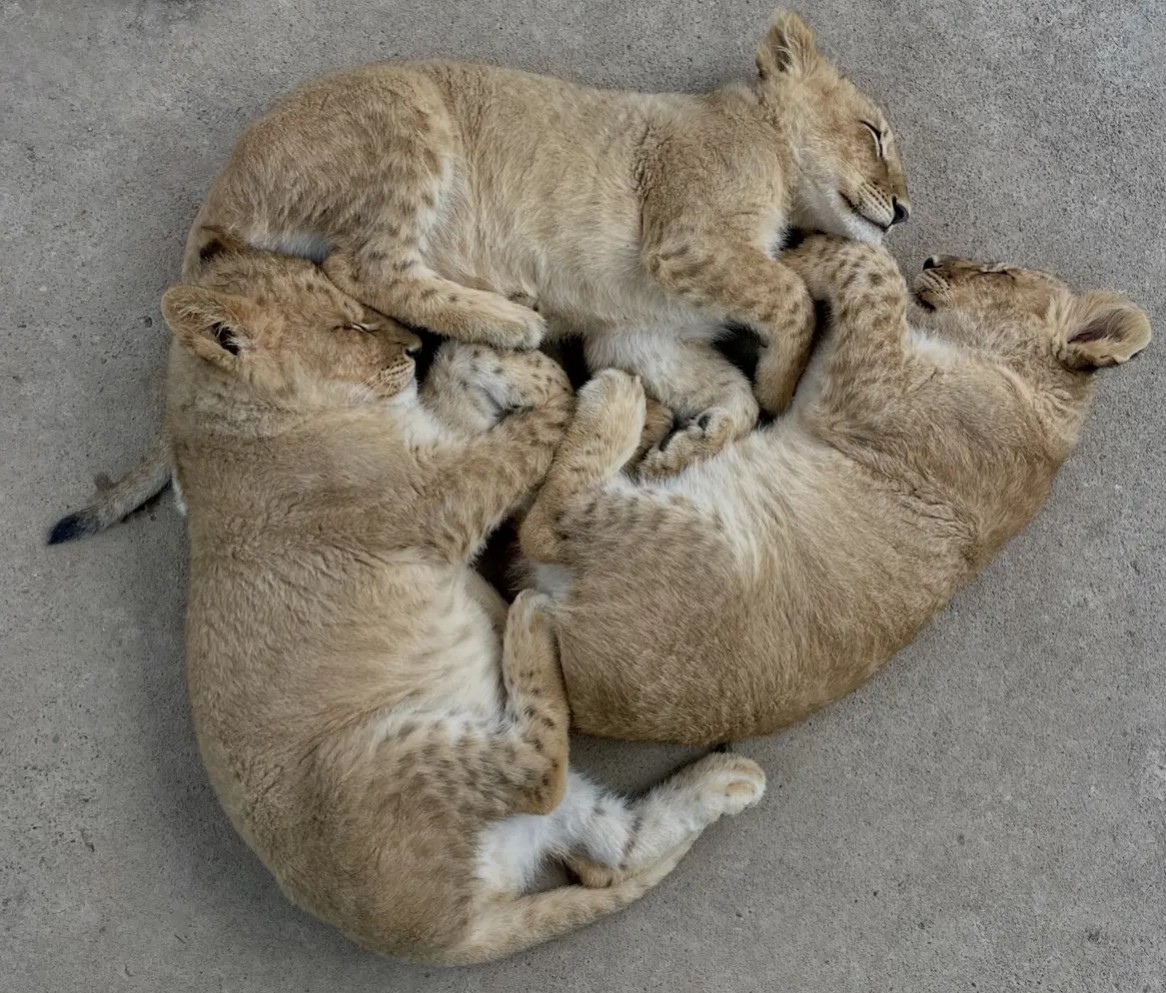
Will often rest and sleep up to 21 hours in a day.
Second largest cat.
Sources: IUCN: RED LIST Carnivores of the World: SECOND EDITION Washington Department of Fish and Wildlife U. S. Fish & Wildlife Services